

The Google Local Pack is one of the most visible — and valuable — places your business can appear in local search results.
In this guide, we’ll explain what the Google Local Pack is, how it works, why it matters for local SEO, and the steps businesses can take to improve their chances of appearing in it.
Get your free audit!
What Is the Google Local Pack?
The Google Local Pack (also called the local pack, the map pack, the Google map pack, the Google 3 pack, or the local map pack) is the block of local business listings Google displays above its standard organic results when a search has local intent. It typically pairs a Google map with three local business listings, which is why people often call it the google local 3 pack or local 3 pack. On mobile, the same feature is sometimes nicknamed the “snack pack” because of its compact, snackable size.
The screenshot below shows a typical Google Local Pack as it appears at the top of the search results — a map paired with three highlighted local business listings:
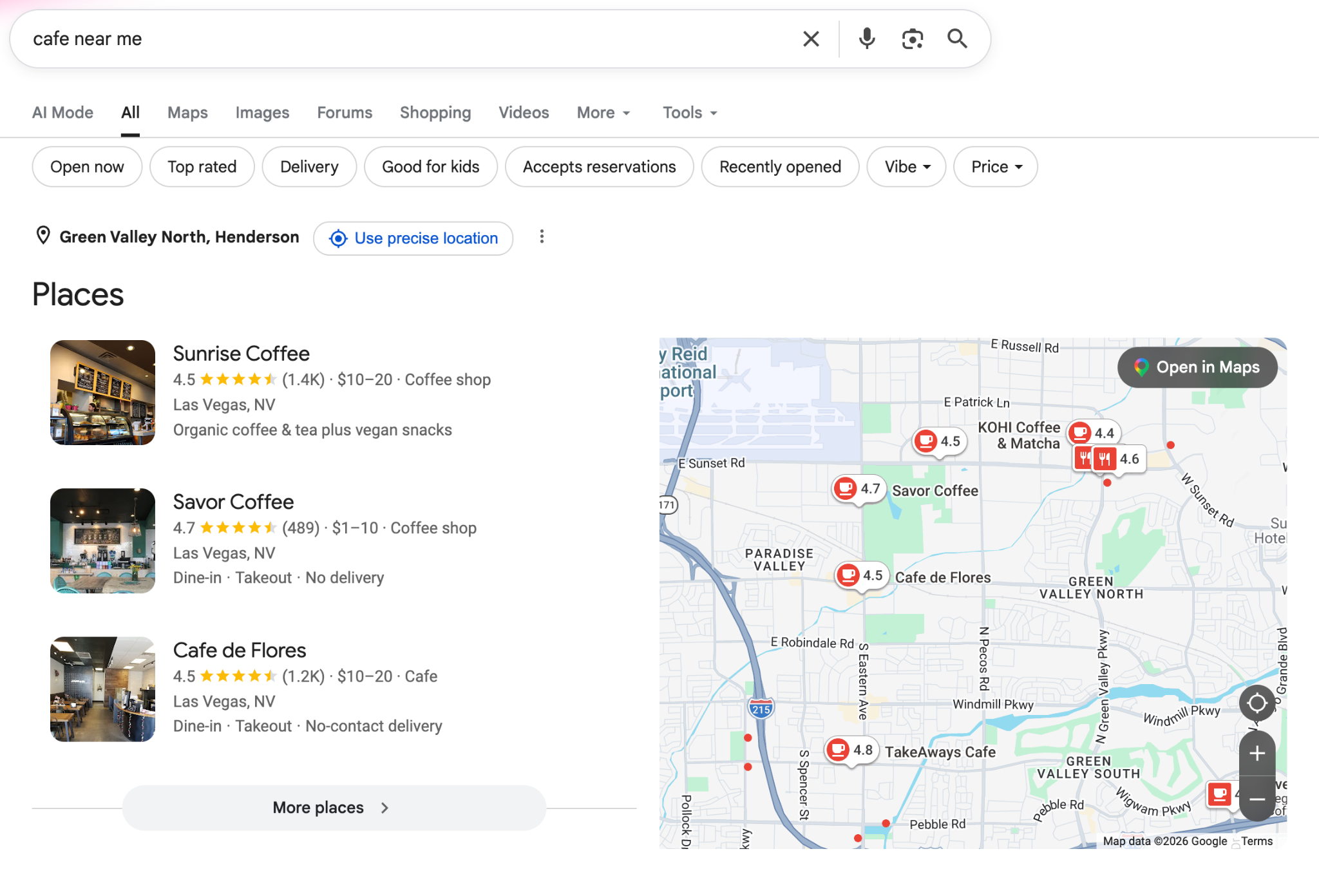
Each local pack listing pulls its information directly from the business’s Google Business Profile (formerly Google My Business). Because these listings appear before traditional organic links, they capture a large share of clicks in local searches.
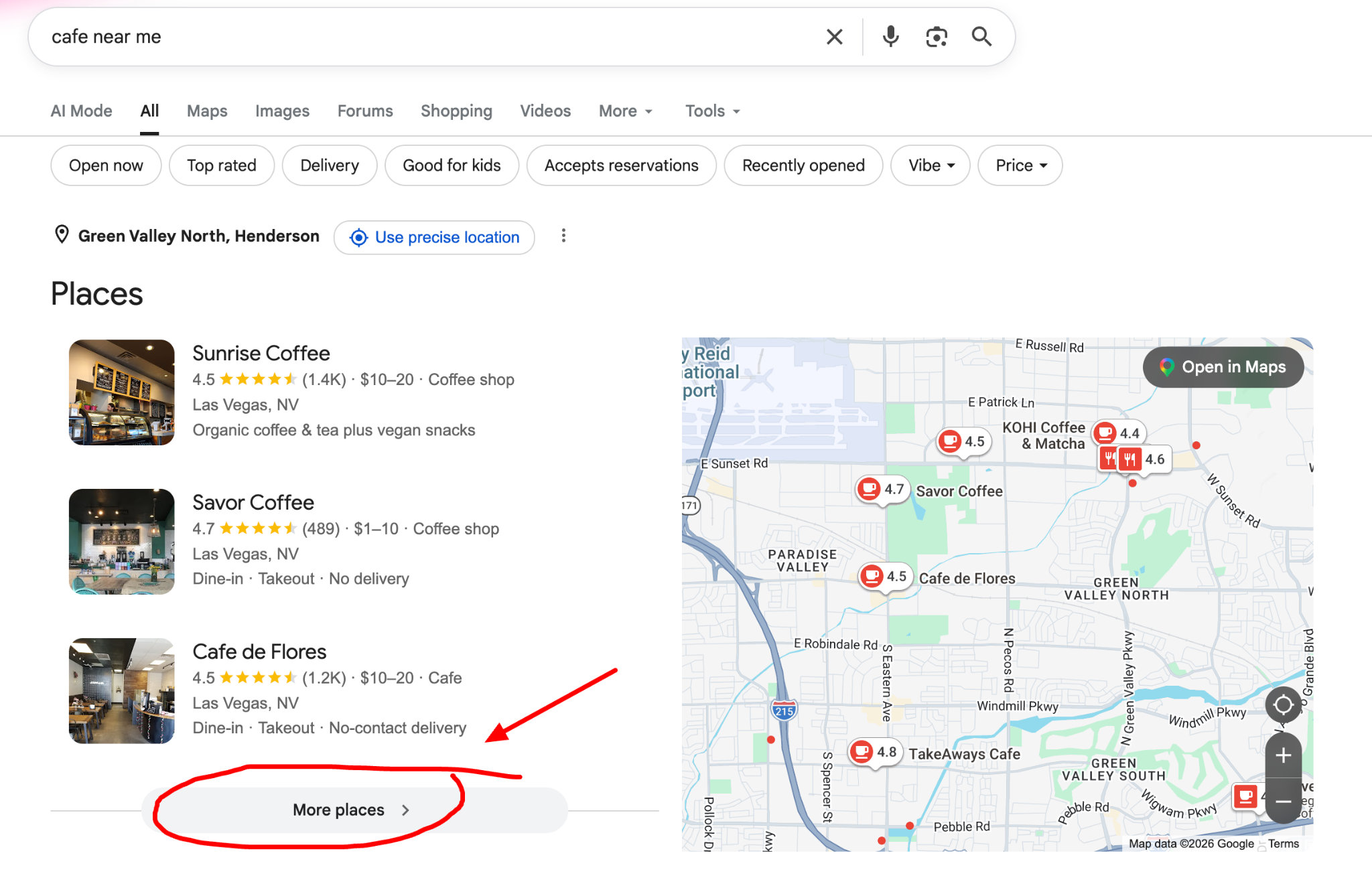
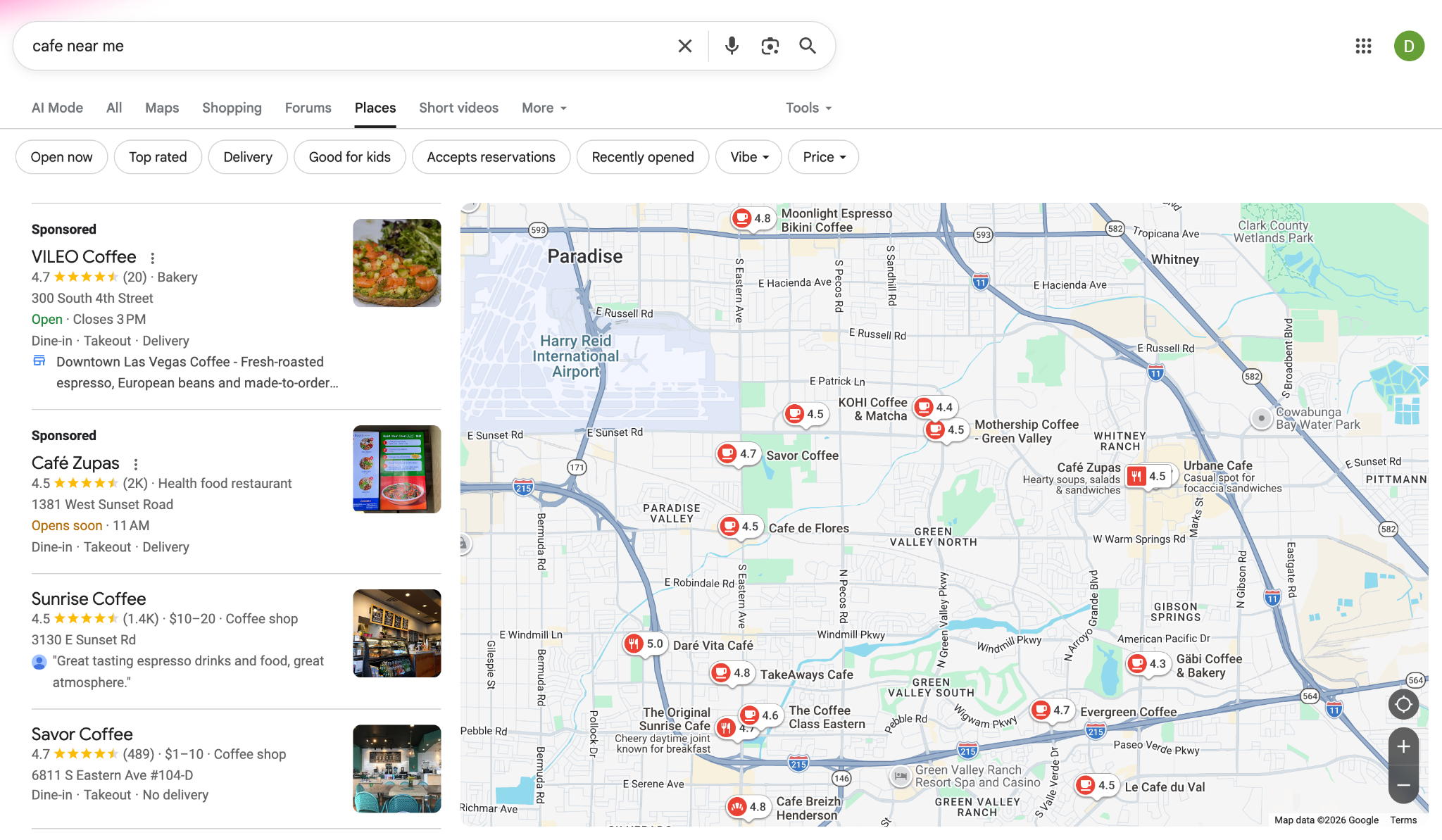
If a searcher wants to see more options, they can tap into the Google Local Finder or “Places” — an expanded list and map view that shows additional local business listings beyond the top three. The Local Finder is essentially the full directory behind the local pack, while the local pack itself is the curated top three you see first. The screenshot below shows what the Local Finder looks like when expanded:
The Anatomy of a Local Pack Listing
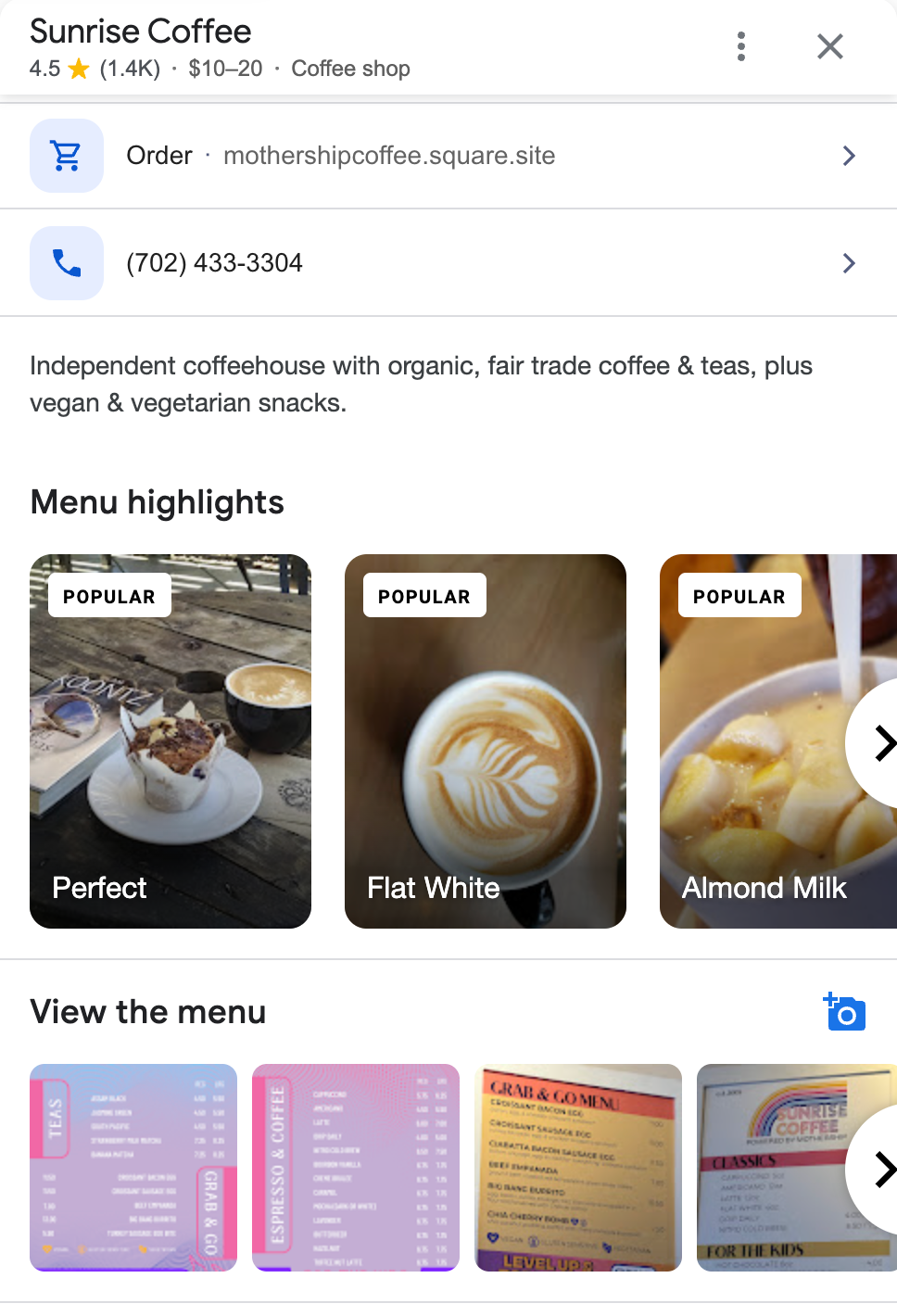
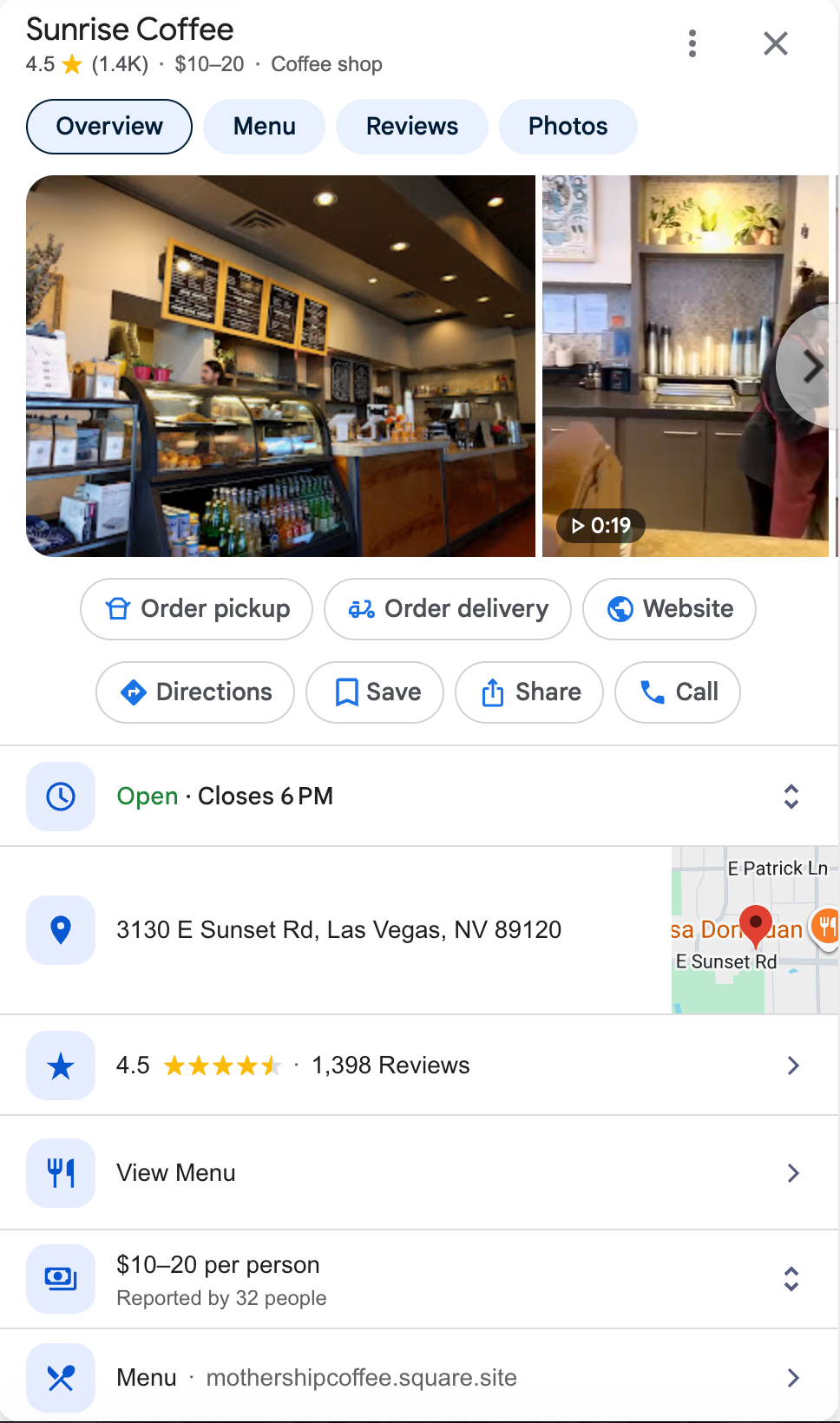
Each entry in the Google Maps pack is designed to help searchers make a fast decision. A typical listing shows:
- Business name
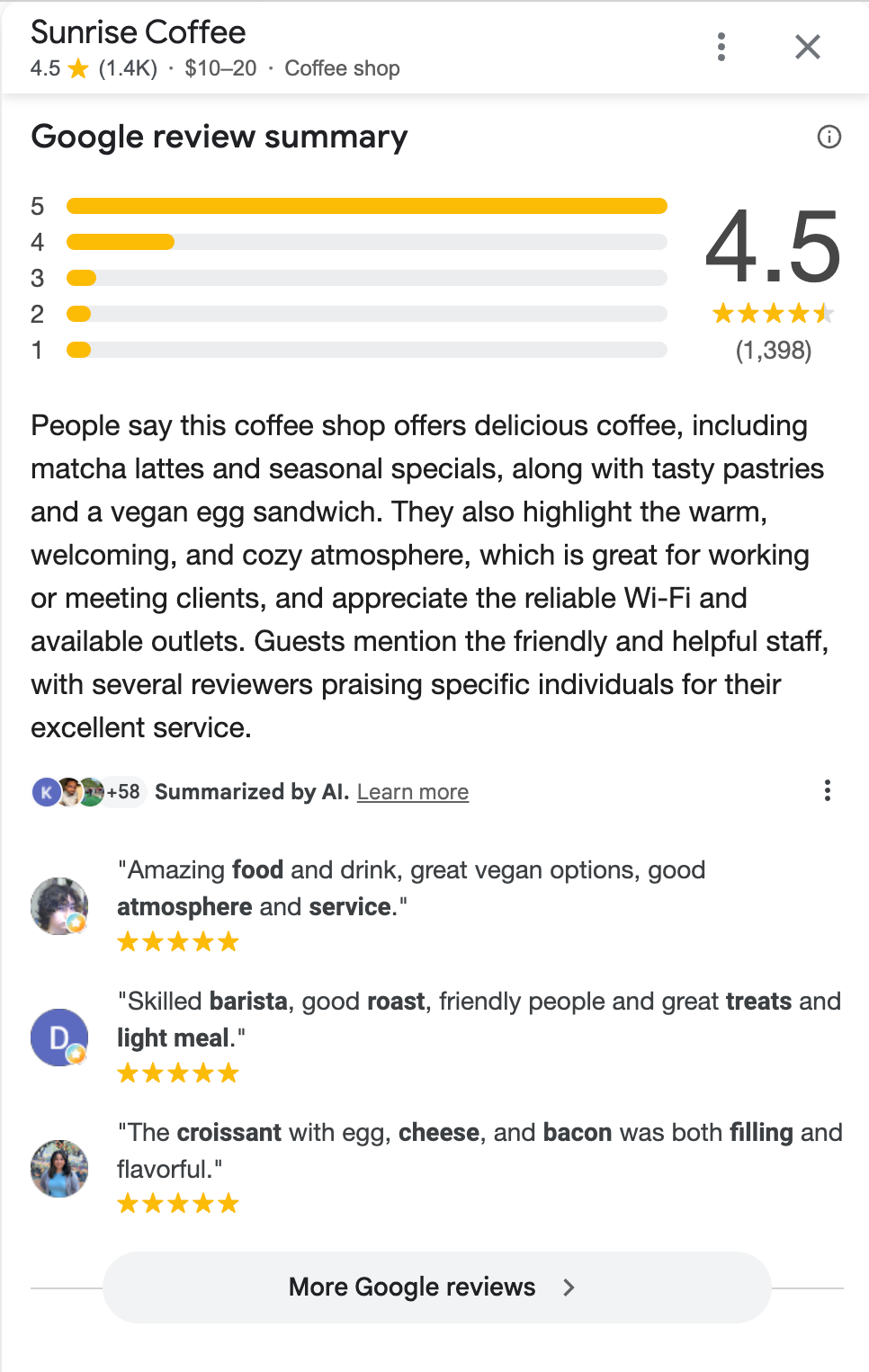
- Google review star rating and review count
- Business category
- Hours
- Location on the Google map
Quick actions like Call, Directions, or WebsiteHere’s a closer look at a single listing so you can see each of these elements labeled:
When and Why the Local Pack Appears
Google shows the local pack when it detects local intent, a strong signal that the searcher wants a nearby business or service rather than general information.
A local keyword like “emergency electrician near me,” “best tacos in Austin,” or “family dentist” tells Google’s algorithm that local results will be most helpful, so it surfaces the map pack at the top of the local search results.
Not every query triggers a local pack. Informational searches — “what is local seo,” for example — usually return standard organic results or a featured snippet. But the moment a search carries commercial, location-based intent, the Google local pack results take priority.
That’s exactly why ranking here matters so much: these are the searches where local customers are ready to call, visit, or buy.
How Google Decides Who Ranks in the Local Pack
Google uses three core factors to determine local pack ranking. Understanding them is the foundation of any local pack SEO effort. Improving your local ranking in the Google local map pack comes down to strengthening all three at once.
1. Relevance
Relevance is how well your business listing matches what someone is searching for. A complete, accurate Google Business Profile with the right primary category, services, and a clear description helps Google’s algorithm understand exactly what you offer and match you to the right local keywords.
2. Distance
Distance measures how close your business is to the searcher or to the location named in their query. You can’t change your address to game proximity, but you can make sure your service areas and location details are set correctly so you appear for the right local searches.
3. Prominence
Prominence reflects how well-known and trusted your business is, both online and offline. Google looks at the quantity and quality of your Google reviews, your local citations and business listings across the web, backlinks, and your overall organic presence. The stronger your reputation signals, the more likely you are to earn a spot in the local 3 pack.
How to Improve Your Local Pack Visibility
Earning a spot in the map pack is about consistently sending Google clear, trustworthy signals. Here are the highest-impact moves for better local pack ranking.
Optimize Your Google Business Profile
Your Google Business Profile is the single most important asset for local pack visibility. Claim and verify your listing, then complete every field:
- Accurate name, address, and phone number
- Correct categories
- List all services
- List accurate hours
- High-quality photos
- Acquire as many good reviews as possible
Strong Google business profile optimization is what turns a bare-bones Google My Business listing into a competitive local pack contender. Keep it current; outdated hours or details can quietly cost you rankings and customers.
Build Local Citations and Consistent Listings
A citation is any online mention of your business name, address, and phone number (NAP). Build local citations across trusted directories, and make sure your NAP is identical everywhere: your website, your Google Business Profile, and every other local business listing. Inconsistent business listing information confuses Google’s algorithm and erodes the trust on which prominence is built.
Earn and Manage Google Reviews
Reviews are one of the most visible elements of every local pack listing, and they influence both ranking and click-through rate. Encourage satisfied local customers to leave a Google review, and respond to reviews (positive and negative!) to show you’re engaged. A steady stream of recent, high-quality reviews is a powerful prominence signal.
Use Google Posts and Fresh Content
Publish Google posts to share offers, updates, and local events directly on your profile. Fresh activity signals an active, relevant business. On your website, create localized content built around local keywords and the neighborhoods you serve to reinforce relevance for local search.
Strengthen Your Organic SEO Foundation
Local SEO and traditional SEO reinforce each other. A fast, mobile-friendly website with strong on-page optimization and quality local backlinks boosts the prominence Google rewards in local pack results. Use tools like Google Keyword Planner to find the local keyword opportunities your customers actually search for.
How to Track Your Local Pack Performance
Like any marketing channel, your local pack SEO efforts deserve to be measured. A few free tools make it straightforward:
- Google Business Profile insights — see how customers find your listing, plus calls, direction requests, and website clicks.
- Google Search Console — monitor the queries and local keywords driving traffic to your site.
- Google Analytics — track how local visitors behave once they reach your website and which pages convert.
Watch your Google Local Pack ranking for your most important local keywords over time. If you’re not appearing in the local pack yet, the Local Finder will show where you currently stand against competitors, so you know how much ground there is to make up.
Local Pack vs. Paid Local Placements
It’s worth knowing the difference between the organic local pack and paid options.
The Google local pack results we’ve described are earned through local SEO and a well-optimized Google Business Profile. You don’t pay per click for them. Above or alongside the pack, you may also see Local Services Ads and standard Google Ads, which are paid placements.
Get Your Business in Local Search with Keoch
Keoch is a digital marketing agency that helps businesses improve their visibility in local search through local SEO, Google Business Profile optimization, content strategy, technical SEO, and ongoing search marketing support.
If you’re not appearing in the Google Local Pack — or you’re unsure how your business compares to competitors — Keoch offers free local SEO audits that evaluate your rankings, citations, Google Business Profile, website, and competitive landscape. We’ll identify visibility gaps, uncover ranking opportunities, and provide clear next steps to help you attract more local customers.