


PPC advertising benefits your company by putting your offer in front of potential customers at the exact moment they are searching for it, with full control over who sees it, what you spend, and how success is measured. That combination (speed, precision, and measurability) is what separates pay-per-click advertising from almost every other digital marketing channel available to a growing business.
This guide explains the real benefits of pay-per-click advertising:
- How it works
- What it is genuinely good at
- Where it is oversold
- How to tell whether it belongs in your marketing mix
If you are weighing paid search against other marketing strategies, or trying to justify a budget internally, start here.
What Is PPC?
PPC stands for pay-per-click. It is a form of online advertising built on two core concepts:
- Impressions: The total number of times your ad appears on someone’s screen.
- Clicks: The number of times people actually click on that ad to visit your link.
Under this model, you only pay when someone clicks your ad. Show the ad a thousand times and get five clicks, and you pay for those five clicks, not the thousand impressions.
PPC marketing allows advertisers to drive targeted traffic to their websites, reach potential customers, and generate leads without paying for every impression. It is a common digital advertising model used across search engines, shopping platforms, and social media.
How Does PPC Work?
Most PPC advertising runs on search engines, where PPC ads appear alongside organic search engine results for a query someone just typed. These paid placements are commonly found on search engine results pages (SERPs), including Google and Bing.
The mechanics behind the scenes are simpler than they look:
- You conduct keyword research to identify relevant keywords and specific search terms your target audience uses, then write compelling ad copy for those searches.
- You organize related keywords and PPC ads into ad groups within a campaign, then set a bid (the maximum you are willing to pay for a click) and a daily or monthly budget.
- When someone searches, an auction runs in milliseconds among all eligible advertisers.
- Position and cost are decided by more than money. Google’s Quality Score documentation explains that expected click-through rate, ad relevance, and landing page experience are important indicators of ad quality. Actual auction rankings also depend on factors such as bids, competition, and search context.
- You pay when someone clicks, and with proper conversion tracking, you can measure what that click produced (for example, direct sales, submitted forms, quote requests, phone calls, sign-ups, etc.).
That fourth point is the one most people miss. PPC marketing is not a bidding war that the biggest budget automatically wins. Smaller budgets can still compete:
- Quality Beats Cash: Google considers ad relevance and landing page experience alongside bids and other auction factors.
- Smarter Spending Wins: A tight, well-structured PPC campaign can outperform a larger budget that relies on poor-quality ads.
- Level Playing Field: You do not necessarily need the biggest wallet to compete in your market, just a better-targeted ad experience.
The Main Benefits of PPC Advertising
The advantages of PPC fall into six categories.
1. Speed
PPC is one of the fastest ways to appear prominently in search results. A campaign built today can be serving impressions and clicks tomorrow. Search engine optimization builds a durable asset, but it typically works on a timeline of months. Paid search can start generating website traffic much sooner.
That makes PPC the right tool for a product launch, a seasonal push, a new location, or any moment where waiting is not an option.
2. Precision Targeting
One of the biggest advantages of PPC is how narrowly you can define your target audience. Depending on the PPC platform and campaign type, you can target by:
- Search intent: The specific words someone typed, which tells you what they want right now.
- Location: A country, a metro area, or a radius around your storefront or service area.
- Device: Mobile, desktop, and tablet, with device-specific bidding adjustments where supported.
- Schedule: Days and hours when your team can actually answer the phone.
- Audience signals: Past website visitors, existing customers, or people with demonstrated interest in your category.
Traditional advertising pays to reach a broad audience and hopes a fraction of it is relevant. PPC allows you to focus your ad spend on the searches, audiences, and placements most likely to generate results.
By targeting relevant keywords and audiences, businesses can attract targeted traffic instead of paying for visits from people who are unlikely to become customers.
3. Budget Control
There is no minimum commitment that locks you in for a year. You set a daily budget, adjust it whenever you like, pause underperforming PPC campaigns, and shift spend toward what is working.
For companies with seasonal demand or uneven cash flow, that flexibility is a genuine operational benefit, not just a marketing one.
A small business can start with a modest budget, test different ad campaigns, and increase its investment once the results justify additional spending.
4. Measurability
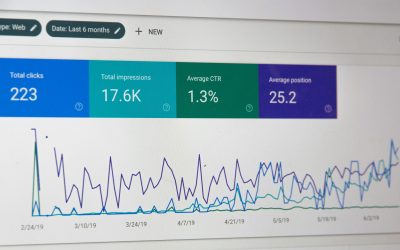
PPC is one of the most measurable marketing channels available. With conversion tracking in place, you can see which search term produced which click, which click produced which lead, and what that lead cost.
Tools such as Google Ads and Google Analytics can help businesses evaluate campaign performance, understand visitor behavior, and measure conversions.
That means real answers to the questions leadership actually asks:
| Metric | What it means | What it tells you | Why it matters |
|---|---|---|---|
| Impressions | Total times your ad appeared | How wide your reach is | Shows if your market targeting is broad enough |
| Click-through rate (CTR) | Percentage of impressions that resulted in clicks | How engaging and relevant your ad may be | Helps evaluate ad effectiveness |
| Cost per click (CPC) | Average price paid per click | What you are paying to attract visitors | Directly impacts how far your daily budget stretches |
| Conversion rate | Percentage of clicks that turn into leads or sales | How effectively your traffic converts | Helps identify opportunities to improve your landing page and offer |
| Cost per acquisition (CPA) | Average cost to get one new lead or sale | Your cost of acquiring a conversion | Helps evaluate whether your ad spend is financially sustainable |
| Return on ad spend (ROAS) | Revenue generated per dollar spent on ads | Revenue return on your advertising investment | Helps assess revenue performance, although it does not account for all business costs |
This visibility is also what makes PPC accountable. You can evaluate PPC ad campaigns based on lead generation, conversion rates, and actual revenue rather than impressions and clicks alone.
If a campaign is not performing, the data can help you identify what needs improvement, whether that is your targeting, ad copy, landing page, or overall PPC strategy.
5. Fast Learning You Can Use Everywhere Else
PPC is one of the fastest market research instruments most companies have access to. With sufficient campaign data, you can learn:
- Which words your customers actually use for what you sell.
- Which offers and value propositions get clicked, and which get ignored.
- Which locations, devices, and times of day produce buyers rather than browsers.
- Which landing pages convert, and where visitors drop off.
That intelligence feeds your SEO keyword research, website copy, sales scripts, product positioning, and broader content marketing strategy.
For example, a successful PPC campaign might reveal that customers respond more strongly to one service description than another. You can then use that insight to improve organic website content, email marketing, and other digital marketing efforts.
6. Brand Presence and Remarketing
Even when someone does not click, your PPC ad can place your name prominently in search results, helping increase brand visibility and awareness among people searching for your category.
And when someone visits your site without converting (which is most visitors), remarketing campaigns can let you show relevant ads to eligible visitors as they browse elsewhere.
Remarketing can be an effective way to re-engage potential customers who have already demonstrated interest in your products or services, particularly when your sales cycle involves multiple visits or a longer decision-making process.
How Can PPC Help Your Business in Practice?
PPC delivers the most value when it’s aimed at a specific business problem. Here are the most common ones:
| Business situation | How PPC helps |
|---|---|
| New product or new location launch | Immediate visibility while SEO and word of mouth build |
| Need to test a market or offer | Understanding of which messages and offers get a response |
| Seasonal demand spikes | Scale spend up in peak weeks, down in quiet ones |
| Long sales cycle | Remarketing keeps you present through a months-long decision |
| Unclear customer language | Search term data reveals how buyers actually describe the problem |
| Competing against bigger brands | Targeting and ad relevance let smaller budgets reach the buyers most likely to convert |
| Need for predictable lead flow | Once CPA is established, you can forecast lead volume and adjust budget |
PPC can ultimately provide clear data on what’s working, transforming your marketing into a measurable growth engine.
What Types of PPC Campaigns Can Your Company Run?
Pay-per-click is not one thing. Different PPC platforms and campaign types serve different jobs, and choosing the wrong one is a common reason a first attempt at PPC disappoints.
- Search ads: Text ads shown for specific searches on platforms such as Google Ads and Microsoft Advertising (formerly Bing Ads). Often a high-intent ad format and a useful starting point for companies looking to capture existing demand.
- Shopping ads: Product listings with an image, price, and merchant name, driven by a product feed. Particularly useful for ecommerce businesses and retailers.
- Display ads: Image ads across websites and apps. Often used for brand awareness and remarketing to people who have already visited your website.
- Video ads: Placements on YouTube and other video platforms, often used for awareness, product education, and audience engagement.
- Social media ads: Paid advertising on social media platforms such as Facebook, Instagram, and LinkedIn. Meta Ads, including Facebook Ads, can help businesses reach audiences based on interests, behaviors, and other targeting signals. LinkedIn Ads may be particularly useful for B2B companies.
- Local ads: Advertising formats designed to encourage calls, direction requests, and store visits, which suit service businesses with a defined geographic area.
Not every ad format uses a pay-per-click pricing model. Some social media and video campaigns charge based on impressions or other actions, even though they are often managed alongside PPC campaigns.
A sensible, phased approach for a company new to digital advertising is to prove the economics on search first, add remarketing once there is enough traffic to re-engage, then expand into shopping, social media, or video ads when the core is profitable.
On the other hand, spreading a modest budget across multiple campaign types at once can make it difficult to collect enough data to understand what is actually working.
How to Make Your PPC Campaigns Profitable
Successful PPC campaigns depend on more than simply bidding on keywords. Getting these four fundamentals right gives your campaign every advantage, while skipping them makes it tough for any strategy to succeed.
- Intent match: The searches you bid on should describe a problem you solve, not a topic you are adjacent to. Strong keyword research helps identify relevant keywords while avoiding broad, research-stage terms that burn budget without producing customers.
- Message match: Your ad copy should promise exactly what the search asked for, and the landing page should deliver exactly what the ad promised. Compelling ad copy helps attract qualified clicks, but a mismatch between the ad and landing page can hurt conversion rates.
- Speed and clarity on the page: A slow page or a form asking for eight fields can undo good targeting. A streamlined form and one obvious action can help reduce friction.
- Follow-up: Prompt responses to qualified leads can improve your chances of converting them. Plenty of underperforming PPC accounts do not have a media problem at all. They have a response-time problem.
Notice that only the first two of those four live primarily inside the ad platform. This is why good PPC management services look at your landing pages and your lead handling, not only your bids.
PPC vs. SEO: Which Does Your Company Need?
Most companies benefit from both because they solve different problems. PPC buys attention now, and SEO earns it over time.
| PPC | SEO | |
|---|---|---|
| Time to results | Days | Months |
| Cost model | Pay per click, ongoing | Investment in content and site quality |
| What happens when you stop | Paid traffic generally stops | Organic visibility may persist, although rankings can change |
| Control over messaging | High, change ads any time | Slower to change and re-rank |
| Best at | Immediate demand capture, testing, scaling | Durable, compounding organic traffic |
If you want the paid side handled properly, Keoch’s SEM and PPC services cover strategy, build, and ongoing management. The SEO side runs alongside it.
Is PPC Worth It?
PPC is worth it when the value of a customer comfortably exceeds what it costs to acquire one, and not before. Being upfront about the constraints is the only way to make that call properly.
- It stops when you stop: PPC rents attention. You do not own the traffic. Budget pauses can affect your pipeline immediately.
- Costs vary enormously by industry: In competitive categories, clicks can be expensive enough that thin margins make paid search hard to justify.
- A weak landing page wastes good clicks: If the page someone lands on is slow, confusing, or asks too much, no amount of bidding fixes it.
- It rewards ongoing management: Set-and-forget ad campaigns can drift into irrelevant search terms and wasted spend. Budget for PPC management, not only the media.
- Tracking has to be right first: Without accurate conversion tracking, you are optimizing toward clicks instead of customers.
Frequently Asked Questions About PPC
What Are the Main Benefits of PPC Advertising?
The main benefits of PPC advertising are speed, targeting precision, budget control, measurability, market learning, brand awareness, and remarketing. You can launch in days rather than months, target specific audiences and locations, control your ad spend, and measure what happens after someone clicks. The search term and conversion data PPC generates can also improve your SEO, website content, and sales messaging.
How Does PPC Advertising Benefit Small Companies Specifically?
Smaller companies benefit because PPC is not purely a budget contest. Ad rank depends on relevance, landing page experience, bids, and other factors, so a focused advertiser with tight targeting and a strong landing page can compete against larger advertisers in specific, high-intent searches. Small businesses also benefit from the flexibility to test ad campaigns with a modest budget and adjust spending based on results.
How Much Does PPC Cost?
There is no standard figure. Cost per click varies widely by industry, location, competition, and PPC platform, and total cost depends on how many clicks you buy. The more useful question is what a customer is worth to you. If a customer generates $3,000 in revenue and it takes twenty clicks to acquire one, a relatively expensive click may still be worthwhile, depending on your margins and other costs. If a customer generates only $40, the economics may be much more difficult.
How Long Before PPC Shows Results?
Clicks and impressions can arrive soon after a campaign launches and its ads are approved. Reliable conclusions about cost per acquisition usually need several weeks of consistent data, and longer in low-volume categories where a handful of conversions can swing the numbers. Judging a campaign in its first few days can lead businesses to stop promising campaigns before they have enough data.
Should I Run PPC and SEO at the Same Time?
For most companies, yes. PPC captures demand that exists today while SEO builds long-term organic visibility. The two channels can also share valuable data. Search terms that convert through paid ads are strong candidates for organic content, and pages that perform well in organic search may offer useful insights for PPC landing pages. Running them together can make both marketing strategies more effective.
Get Keoch’s Free Business Audit to Measure Your Marketing Success
Want to know whether paid search fits your numbers? Take our free business audit, and we will look at your market, your competitors, and what a lead might realistically cost before you spend anything.